

The magazine of the art-form of the photo-essay
“A free, really high quality photo-essay magazine. Fabulous!”
Stephen Fry. British actor, writer and film & documentary maker

June 2015 back issue
by Beverly Joubert


As the poaching of rhinos in South Africa increases dramatically year by year, wildlife filmmakers, conservationists
and National Geographic Explorers-in-Residence, Beverly and Dereck Joubert, are spearheading the largest airlift of
rhinos to date. Collaborating with Great Plains Conservation and andBeyond, they aim to move 100 rhinos from
poaching hotspots in South Africa to safe havens in Botswana. The first ten rhinos have just been successfully
released following a crowd funding drive on www.trevolta.com/rhinos. Creating new populations of rhinos saved them
from extinction before, and with 1215 rhinos poached in South Africa last year alone, this project is a timely one as the
tipping point between rhino deaths exceeding births has been realised.
As a professional wildlife photographer, Beverly captures this incredible journey.

A blindfolded rhino after being darted by the capture team.

Once a suitable rhino is identified from the helicopter, the vet alerts the professional capture team on the ground so
they can get into position before the rhino is darted from the air.

The team act swiftly and blindfold the rhino before adding earplugs, keeping it calm as the sedative works its way
through its system and it lays down.

This highly experienced and specialized team work quickly so that the rhino is only sedated for a very minimal amount
of time to ensure its stress levels are kept low and its health is not compromised.

As well as treating the rhino for ticks and internal parasites, a number of measurements are taken by the research
team, and notches are made in the rhinos ears so that it can be easily identified in the future.

Moving a rhino that weighs more than a tonne is no easy feat. Once standing, the team walks the rhino around in a
large arc to allow the blood to flow through its legs. The team on hand have been trained in every aspect of this move
and have years of capture experience behind them.

The rhino is gently guided into a crate, which will be used to transport the rhino to the quarantine boma a short
distance away. It is remarkable how rapidly the capture team works. They’ve clearly got this down to a fine art and
everything goes smoothly.

Once inside the crate, the rhino’s blindfold and earplugs are removed.

The crate is gently lifted onto the back of a truck ready for transport to the boma.

The first rhino of the ten is safely delivered to the large boma where it will stay during quarantine before being its
journey to Botswana. They are guarded around the clock and have plenty of food and water.

The day has finally arrived. After months of work and organizing, it is time to move the ten captured rhinos to an area
safe from poaching. Even though it was more costly to fly them from South Africa to Botswana rather than drive them,
we felt it was vital as it cut down the journey time drastically, which meant the rhinos’ stress levels were also reduced
significantly and the chances of an ambush by poachers was minimal.

The rhino cargo plane was the largest aircraft to have ever landed in Maun International airport in Botswana. But when
you are transporting 10 rhinos, in 10 specially designed crates, you need an aircraft of epic proportions. When the
plane landed at sunrise, the crates were finally unloaded, ready to begin the final part of their journey.

Cranes loaded the rhino crates onto trucks and they begun their journey by road into a remote area in Botswana. The
trucks drove in convoy and were followed by an impressive military entourage of 60 soldiers, together with a helicopter
that scouted ahead for poachers.
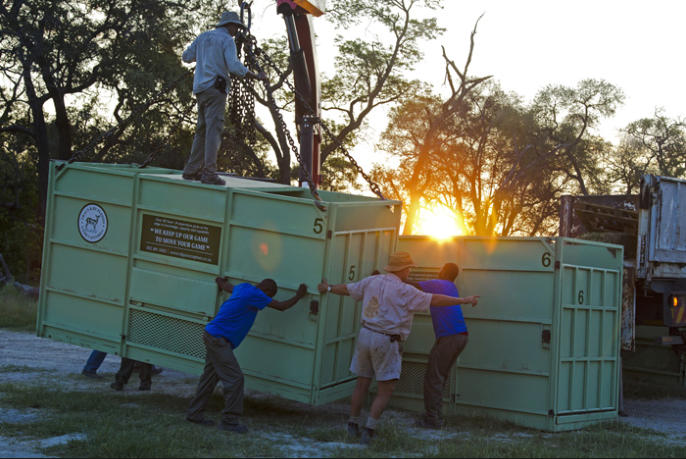
As the sun begins to set the trucks carrying the rhinos finally reach the release site and the crates are carefully
offloaded.

All 10 rhinos are in excellent health and should do well in this habitat, which is well suited to them and will supply them
with plenty of food, water, and ultimately - safety from poachers.


Freedom! Months of hard work and planning has culminated in a lump in the throat and an overwhelming sense of
gratitude to all who donated to Rhinos Without Borders and made this possible. It is sad that we have to resort to such
drastic measures to combat rhino poaching, but watching a rhino step free into an environment that is safe from the
threat of poaching is an incredible feeling. Not only that, but the Botswanan rhino population has just been given a
great boost and new genes. In the following years we hope to see a great many more of these enormous herbivores
on these plains.

Before the light faded all of the rhinos were released into the wild. The whole journey took just 24 hours and the rhinos
settled into their new home quickly. Some of the rhinos were so relaxed they walked out calmly and began grazing
almost straight away. It was wonderful to see them finally safe.

And he’s off in a cloud of dust! While most of the rhinos left their containers slowly and calmly, this one shows us that
he can certainly look after himself as he charges off to join the others and enter a safer life in a new pristine
environment. Thank you to an incredible team who made such a big effort to ensure this all went seamlessly. We can’t
wait to move the next 10 and hope we can continue to gain global support for this vital initiative to save a species from
extinction (www.trevolta.com/rhinos).